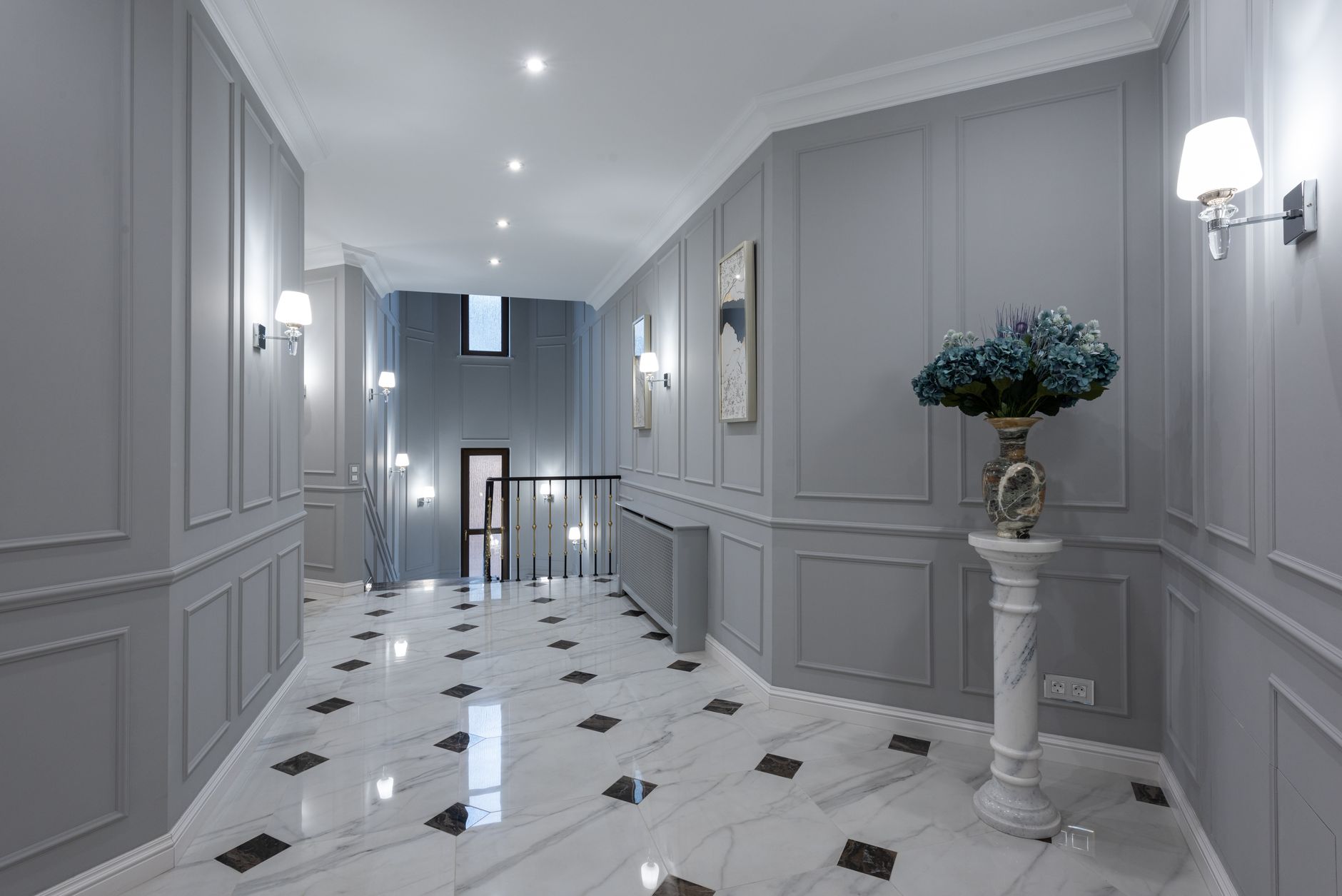
Natural Stone Flooring in Missouri: Costs, Deflection and Sealing
Stone is the most demanding floor you can lay in Missouri and the most permanent when it is done properly — and everything that decides which one you get happens underneath it.
What it costs
Installed natural stone generally starts around $12 per square foot for a straightforward slate and rises well beyond $30 for marble or a large-format limestone with a mortar bed underneath. It is mostly labor and preparation, so the substrate work is a real share of the number rather than an extra.
An estimate, not a quote. These are planning ranges for Missouri, not a quote. What you actually pay depends on your rooms, your subfloor and the material you choose.
Deflection comes first
Natural stone is heavier and more brittle than ceramic and the industry benchmark reflects it: L/720 for stone against L/360 for ceramic tile. Over a timber floor in an older Missouri house that frequently means additional structure or a thicker substrate before a single tile is laid. On a slab it means the slab has to be sound and flat. Either way this is not the place to hope.
Movement, and how to survive it
Stone is bonded, so like tile it must accommodate whatever the substrate does. An uncoupling membrane, a properly flat bed and real movement joints are what allow it to. Skipping them on ground that shifts seasonally is how a very expensive floor cracks along a line.
Sealing and maintenance
Most natural stone is porous and needs sealing on installation and periodically after. Marble is soft enough to etch under ordinary household acids — lemon, wine, some cleaners — and that is chemical damage rather than dirt, so it does not clean off. Slate and quartzite are considerably more forgiving.
Where it belongs
Entries and great rooms, where the floor is doing visual work and the traffic justifies the durability. It is cold and hard underfoot, which is an argument for underfloor heating and against using it everywhere.
Common questions
Is stone a bad idea over a basement slab?
Not at all — a sound slab is the best substrate stone can have, provided vapor is managed and the slab is flat.
Which stone is most practical?
Slate and quartzite: dense, textured enough to be safe wet, and far less prone to etching than marble.
Can I lay stone over a timber floor?
Yes, if the structure meets L/720 and the substrate is built up correctly. That assessment comes before the material choice, not after.