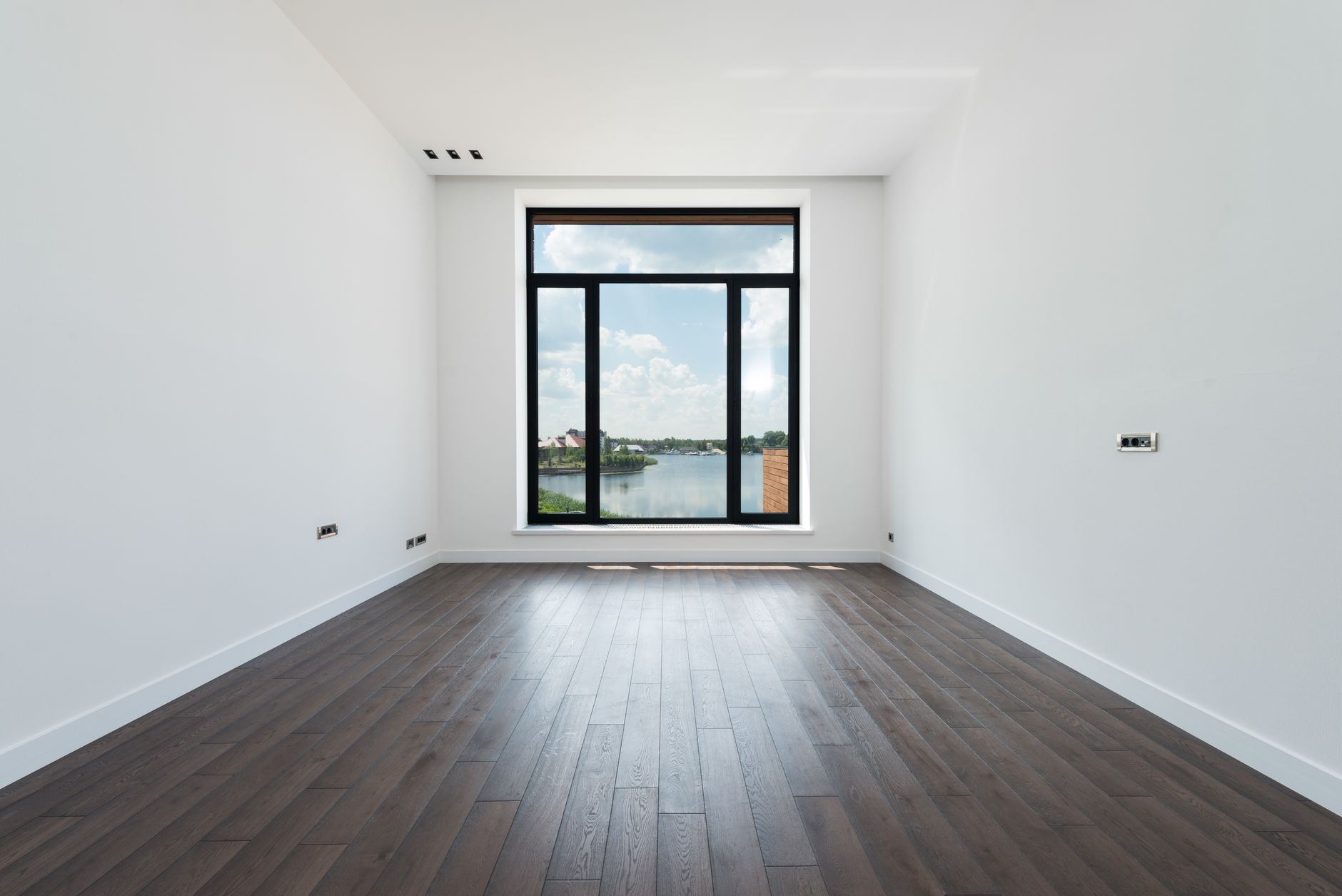
Flooring a Newly Built Missouri House
Two clocks are running in a new Missouri house. The slab is drying, and the ground under it is still finding its level. A floor laid before either has settled inherits both.
Where the new building is
Missouri’s new construction sits in the exurban rings, and the contrast with the core cities is
severe — a wider spread than almost anything else in this group.
| City | Median year built | Built before 1940 |
|---|---|---|
| O’Fallon | 2000 | 0.8% |
| Lee’s Summit | 1994 | 3.1% |
| Columbia | 1993 | 4.4% |
| St. Charles | 1986 | 6.8% |
| Blue Springs | 1986 | 1.6% |
| Springfield | 1975 | 12.8% |
| Kansas City | 1969 | 21.3% |
| St. Louis | 1938 | 57.9% |
O’Fallon and St. Louis are the same metro and sixty-two years apart at the median. If your house
is in the newer column this page is for you; if it is a St. Louis brick two-family,
whether the old floor is worth saving is the more
useful question.
The slab test to insist on
Concrete gives up water for months after the pour. ASTM F2170 is the test that
settles it: probes sealed into holes drilled to 40% of the slab depth, left to equilibrate, then
read as a relative humidity figure from inside the slab.
- Three tests for the first 1,000 square feet, plus one for each additional
1,000. - Most manufacturers cap acceptance between 75% and 85% RH. The number in your
product’s warranty is the one that governs. - Above the cap: wait, mitigate, or choose a material that is indifferent.
Ask for the readings on paper. An untested slab is not a dry slab.
The second clock: the ground
This is the part that makes a Missouri new build different from a new build somewhere with
stable soil. Much of the state sits on clay that swells and shrinks with the seasons, and a house
in its first two years is still finding its level on it. A floor installed into that can develop a
flatness problem that has nothing to do with the flooring and everything to do with what is
underneath.
The practical consequence is that flatness has to be measured at installation and understood as
a moving target rather than a permanent state.
How much the ground actually moves here sets the context;
the flatness tolerance your material requires turns it into
a number you can hold a contractor to. And if the house has visible movement already,
telling settled from still-settling decides whether to
lay a floor at all this year.
Wood framing is drying too
Slabs take the attention, but a framed floor over a basement — which in Missouri is most of them
— is also losing moisture. Material delivered into a house whose heating has never run acclimates
to conditions the house will never repeat. The remedy is the same as everywhere: run the HVAC to
normal operating conditions first, then acclimate to a measured number rather than a stated number
of days.
What tends to be the right answer
| Situation | Usually | Because |
|---|---|---|
| Slab above the cap, and you want wood | Engineered | A stable core tolerates what solid will not |
| Slab above the cap and the schedule is fixed | Vinyl plank | Slab moisture does not affect it |
| House under two years old on clay | A floating floor, or wait | Floating systems tolerate a deck that is still moving |
| Basement level | Vinyl plank or tile | Below grade, moisture is the constraint, not looks |
Ranges are on the Missouri cost guide and the
vinyl plank cost page.
What a complete quote itemizes tells you whether the
builder’s flooring allowance actually covers the prep.
An estimate, not a quote. These are planning ranges for Missouri, not a quote. What you actually pay depends on your rooms, your subfloor and the material you choose.